As global supermarkets, retail chains, warehouse clubs, and home-goods brands move toward stronger, reusable, and more brandable packaging in 2026, PP woven shopping bags are becoming the top choice for heavy-duty retail use — not because they are the cheapest option available, but because they are the option that best solves the specific performance problems that modern retail packaging must address: carrying heavy grocery loads without handle failure, surviving repeated use cycles without structural degradation, resisting moisture from fresh food and bottled drinks, and providing a large, high-quality printable surface that turns every customer carrying the bag into a mobile brand ambassador for the retailer. For buyers sourcing reusable grocery bags bulk for supermarket, hypermarket, warehouse club, and large-format retail applications, the PP woven shopper provides the practical balance of load-bearing strength, water resistance, reuse longevity, and brand visibility that disposable bags and standard non-woven bags cannot deliver.
The commercial logic behind the global retail industry's shift toward PP woven shopping bags is straightforward: when a retailer invests in a bag that customers will reuse 50 or more times, carry through streets and public spaces, and associate with the retailer's brand across months of daily use, the bag becomes a marketing asset whose value compounds with every reuse cycle — delivering brand impressions at a cost per exposure that no other retail packaging format can match. This is why retailers operating at the scale of IKEA, Walmart, and major warehouse clubs have made heavy-duty woven shopping bags a standard part of their retail packaging strategy — and why the PP woven shopper is winning global supermarket retail in 2026.
This guide covers the complete picture for supermarket procurement managers, retail chain buyers, and promotional packaging teams: why standard retail bags fail under heavy loads, what makes a PP woven shopping bag commercially different, how the woven PP structure delivers superior load-bearing and reuse performance, how to evaluate PP woven bag components for retail application requirements, and what procurement and maintenance practices protect the bag's performance and brand value through its reuse life.
The commercial case for investing in PP woven shopping bags starts with a clear understanding of the specific failure mechanisms that standard retail bags create under the heavy-load, long-distance, and repeated-use conditions that modern supermarket and warehouse retail generates — and why each failure mechanism has customer experience and brand consequences that accumulate across every checkout interaction.
Handle failure under heavy grocery loads is the most immediately visible and most commercially damaging failure that standard retail bags create in supermarket and warehouse retail environments. When a customer loads a standard non-woven or lightweight plastic bag with bottled drinks, canned goods, fresh produce, and household items — the typical contents of a modern supermarket shopping trip — the handles are subjected to concentrated load stress that exceeds the design limits of bags built for lightweight promotional use. Handle tearing at checkout or during the walk from store to car creates a customer experience failure that damages the retailer's brand perception and generates the complaints, compensation costs, and replacement bag expenses that erode the apparent cost saving of choosing cheaper packaging.
Bottom seam splitting under concentrated weight is the structural failure that most directly affects product safety and customer trust. When heavy items — bottled drinks, canned goods, or bulk packaged products — are loaded into a bag whose bottom seam is not reinforced for the load, the seam can split during carrying, dropping products and potentially causing injury or damage. For retailers whose brand promise includes quality and reliability, a bag that fails under normal shopping conditions communicates a brand quality message that is the opposite of what the retailer intends.
Low reuse rate eliminating the sustainability and cost efficiency benefits is the commercial failure that most directly affects the retailer's packaging cost per customer interaction. A bag that fails after one or two uses provides none of the reuse value that justifies the investment in reusable packaging — creating a packaging cost that is higher than disposable alternatives without delivering the brand exposure, customer loyalty, or environmental benefit that reusable packaging is supposed to provide.
Understanding what a PP woven shopping bag is — and how its woven polypropylene construction, laminated surface, reinforced handles, and large printable panels work together to create a retail packaging product that delivers heavy-duty load performance, water resistance, long reuse life, and strong brand visibility — is essential for procurement managers evaluating retail bag specifications for supermarket and warehouse retail applications.
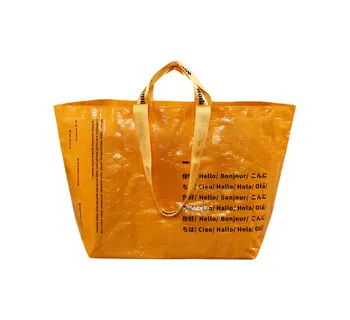
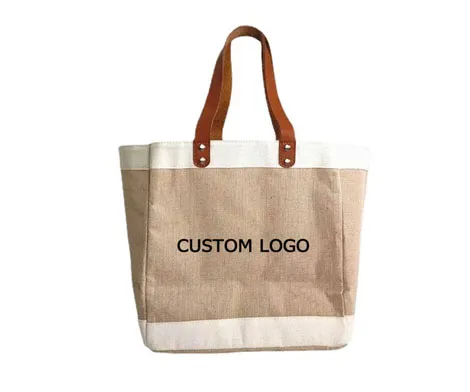
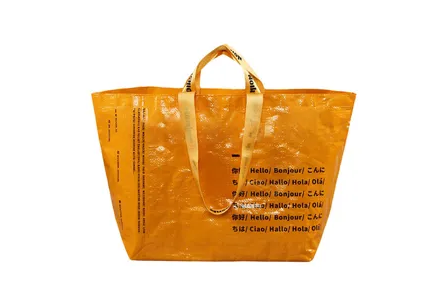
PP woven shopping bags are reusable bags made from woven polypropylene strips — interlaced into a fabric structure that creates strong resistance against pulling, stretching, and tearing that woven construction provides and that non-woven or film-based materials cannot match. A PP woven shopper is commonly used as a reusable grocery bag, supermarket bag, retail carry bag, promotional bag, or heavy-duty shopping bag — serving the full range of retail carrying applications from weekly grocery shopping to warehouse club bulk purchases.
The commercial logic behind the preference of retailers operating at the scale of IKEA, Walmart, and major warehouse clubs for woven shopping bags is grounded in the specific performance requirements of large-format retail:
| Retail Requirement | PP Woven Shopper Performance |
|---|---|
| Large shopping volumes | High-capacity bag design with flat bottom and gusset options |
| Heavy products | Woven structure supports 20 to 30 kg load capacity |
| Long walking distances | Reinforced handles improve carrying stability and comfort |
| Repeated customer reuse | Strong fabric and seams support 50 or more use cycles |
| Strong visual branding | Laminated surface supports bright, large-area full-color printing |
| Bulk procurement efficiency | Cost-effective production for high-volume retail programs |
The technical mechanism by which the woven polypropylene structure, laminated surface, and reinforced construction of PP woven shopping bags delivers the load-bearing capacity, water resistance, and reuse longevity that heavy-duty retail applications require — and why these performance characteristics create the commercial advantages over non-woven bags that make PP woven shoppers the preferred choice for global supermarket retail — is the core product knowledge that procurement managers need to specify the right bag for their retail application.
The strength of PP woven shopping bags comes from the woven structure — polypropylene strips interlaced into a fabric that distributes load stress across the entire bag surface rather than concentrating it at seams or attachment points. This load distribution mechanism is the fundamental reason why PP woven bags can carry 20 to 30 kg of groceries, bottled drinks, and household items without the handle failure and seam splitting that standard retail bags experience under equivalent loads. The woven structure also provides the tear resistance that prevents the progressive failure that begins with a small puncture or stress point in non-woven or film-based bags and rapidly expands under load.
The laminated surface of PP woven shopping bags — typically a glossy or matte BOPP film or coating applied over the woven fabric — provides the moisture resistance that fresh food, bottled drinks, and wet grocery items require. For supermarket retail where bags regularly carry fresh produce, chilled products, and bottled beverages, the laminated surface prevents moisture absorption that would weaken non-laminated fabric and create the hygiene concerns that affect customer reuse behavior.
A well-constructed PP woven shopper can often be reused 50 or more times depending on usage conditions and construction quality — creating a brand exposure timeline that extends months beyond the initial purchase. For supermarkets and retail brands, this means every bag investment delivers repeated brand impressions across every shopping trip, every street carry, and every public space where the customer uses the bag — creating a cost per brand impression that makes PP woven shopping bags one of the most efficient retail marketing investments available.
| Performance Factor | PP Woven Shopping Bags | Non-Woven Shopping Bags |
|---|---|---|
| Load-bearing capacity | Stronger — woven structure for 20 to 30 kg | Suitable for lighter daily use |
| Reuse cycles | Higher — often 50 or more uses | Lower under heavy-load conditions |
| Water resistance | Better with laminated surface | Usually more limited |
| Long-distance carrying | Stronger for groceries and bulky goods | Less suitable for heavy transport |
| Print appearance | Excellent with laminated full-color printing | Good but usually less premium |
| Best application | Heavy duty shopping bags, supermarket bags, warehouse retail | Events, giveaways, lightweight retail |
Non-woven bags are useful for lightweight promotions and lower-cost campaigns, but PP woven shopping bags are the correct specification when the application requires heavy load-bearing, water resistance, long carrying distance, and repeated supermarket use — making them the choice that global retail leaders have made for their core reusable bag programs.
The systematic evaluation of PP woven shopping bag components — fabric GSM, lamination quality, handle construction, seam reinforcement, printing specification, and size design — against the requirements of the specific retail application is the technical procurement knowledge that ensures the selected bag delivers the load performance, reuse longevity, and brand visibility that the application requires.
| Component | What to Evaluate | Retail Performance Impact |
|---|---|---|
| PP woven fabric | GSM, density, tensile strength | Determines load capacity and tear resistance |
| Lamination | Glossy, matte, BOPP film, coating quality | Improves water resistance and print clarity |
| Handles | Webbing type, PP strap, reinforced stitching | Determines load-bearing comfort and durability |
| Seams | Side seam, bottom seam, binding quality | Prevents splitting under heavy grocery loads |
| Bottom design | Flat bottom, gusset, reinforced base | Supports stable packing of groceries and bulky goods |
| Printing | Full-color printing, logo placement, lamination quality | Determines brand visibility and impression durability |
| Size | Small, medium, large, extra-large | Must match the retail product categories being carried |
Supermarkets and grocery chains represent the highest-volume application for PP woven shopping bags — where weekly grocery shopping creates the heavy-load, moisture-exposure, and repeated-use conditions that make woven construction the correct specification. Membership reusable bags, checkout replacement bags, and fresh food packaging all benefit from the PP woven shopper's load capacity, water resistance, and large printable surface.
Warehouse clubs and hypermarkets represent the most demanding load application — where bulk groceries, oversized retail goods, household items, and multi-pack products create carrying loads that approach or exceed the limits of standard retail bags. For warehouse retail where customers regularly carry 20 to 30 kg of purchases from the store to their vehicle, the PP woven shopper's heavy-duty construction is not a premium option — it is the minimum performance specification.
Home goods and furniture retail represents the large-volume, lightweight application — where textiles, storage products, décor items, and flat-packed accessories require a bag that is large enough for bulky items but strong enough to carry them without structural failure.
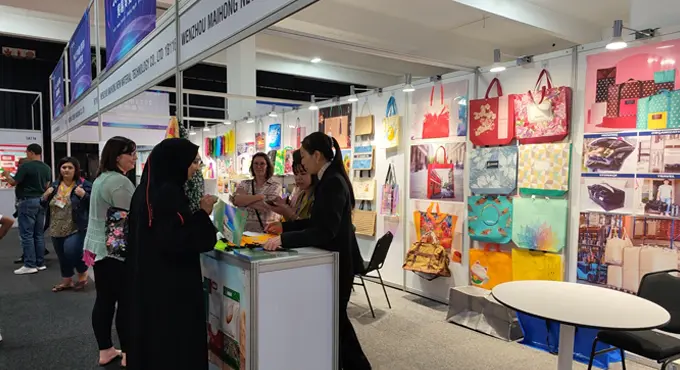
Promotional and corporate campaigns represent the reusable grocery bags bulk application — where trade show giveaways, loyalty program gifts, brand activation events, and CSR campaigns require bags that recipients will actually reuse, creating the repeated brand exposure that makes the promotional investment commercially valuable.
Procuring the right PP woven shopping bags for a specific retail application requires systematic pre-order confirmation of load requirements, fabric specifications, printing needs, and delivery timeline — and end-user maintenance guidance that protects the bag's structural integrity and extends its reuse life.
Before requesting a quotation for PP woven shopping bags, prepare and confirm the following:
Confirm the required load capacity — and verify that the selected fabric GSM, handle construction, and seam reinforcement specification are appropriate for the heaviest products the bag will carry
Confirm the bag size — width, height, and gusset dimensions — and verify that the selected size can accommodate the typical purchase volume of the retail application without overloading the structural limits
Confirm the lamination requirement — glossy, matte, or unlaminated — and verify that the selected lamination provides adequate water resistance for the moisture exposure conditions of the retail environment
Confirm the handle type and length — and verify that the selected handle design provides adequate load-bearing capacity and carrying comfort for the distance customers will carry the bag
Confirm the printing artwork and color specification — and verify that the artwork is prepared at the correct resolution for the selected printing method and that the color specification matches the brand's identity standards
Confirm the order quantity and delivery deadline — and verify that the supplier's production capacity and lead time can meet the retail operation's packaging supply schedule
Confirm the packaging method — flat-packed, bundled, or carton-packed — and verify that the selected packaging method is appropriate for the retail display or distribution logistics of the application
Avoid exceeding the recommended load capacity — overloading concentrates stress on handles and seams beyond their design limits, reducing the bag's reuse life
Keep sharp items away from the fabric and seams — sharp edges can puncture the woven fabric and initiate tears that progressively weaken the bag structure
Wipe clean with a damp cloth after grocery use — the laminated surface of PP woven bags is easy to clean and maintains its appearance through regular wiping
Air dry before folding and storing — storing a damp bag can affect the fabric and lamination quality over time
Store in a dry place away from prolonged heat exposure — high heat can affect the polypropylene fabric and lamination adhesion
Reuse for shopping, storage, travel, and household organization — the PP woven shopper's strength and capacity make it useful for many applications beyond grocery shopping, extending its reuse life and brand exposure
In 2026, the global supermarkets, warehouse clubs, and retail chains that achieve the strongest customer experience, the highest packaging reuse rates, and the most cost-effective brand exposure from their retail bag programs are those that have invested in PP woven shopping bags — choosing the woven polypropylene construction that delivers the 20 to 30 kg load capacity, 50-plus reuse cycles, water resistance, and large-format brand printing that heavy-duty retail packaging requires. The PP woven shopper is not simply a stronger version of a standard retail bag — it is a retail carrying system whose performance characteristics create commercial value that compounds with every reuse cycle, every street carry, and every brand impression it delivers across the months of daily use that its construction supports.
Chenfa Bags supports custom reusable bag production for supermarkets, grocery chains, retail brands, promotional buyers, wholesalers, and global distributors seeking reliable heavy-duty shopping bags and reusable grocery bags bulk solutions.
Contact Chenfa Bags today to discuss your bag size, load-bearing requirement, fabric GSM, lamination, handle design, logo printing, quantity, packaging method, and delivery schedule. Chenfa can help evaluate the right PP woven shopping bag specification for your retail application and provide the production quality, customization capability, and supply reliability that professional retail packaging procurement requires.
Q1: What are PP woven shopping bags and why are they preferred by global supermarkets?
PP woven shopping bags are reusable bags made from woven polypropylene strips interlaced into a strong, lightweight fabric that provides superior load-bearing capacity, water resistance, and reuse longevity compared with standard non-woven or plastic retail bags. Global supermarkets and warehouse clubs prefer them because they can carry 20 to 30 kg of groceries and household items without handle failure or seam splitting, resist moisture from fresh food and bottled drinks, survive 50 or more reuse cycles, and provide a large laminated surface for high-quality brand printing that creates repeated brand exposure across months of customer use.
Q2: How much weight can a PP woven shopper carry?
Depending on the fabric GSM, handle construction, seam reinforcement, and bag size, a heavy-duty PP woven shopper can often be designed to carry approximately 20 to 30 kg — making it suitable for groceries, bottled drinks, household items, bulk retail purchases, and warehouse club shopping where standard retail bags would fail under the load.
Q3: Are PP woven shopping bags better than non-woven bags for supermarket retail?
For heavy loads, long-distance carrying, water resistance, and repeated supermarket use, PP woven shopping bags are significantly stronger than non-woven bags — because the woven structure distributes load stress across the entire fabric rather than concentrating it at seams, the laminated surface provides better moisture resistance, and the construction quality supports 50 or more reuse cycles compared with the lower reuse life of non-woven bags under heavy-load conditions. Non-woven bags remain useful for lightweight promotions and lower-cost campaigns where heavy-duty performance is not required.
Q4: How many times can PP woven shopping bags be reused?
A well-constructed PP woven shopping bag can often be reused 50 or more times depending on load weight, handling conditions, storage practices, and construction quality. This reuse longevity makes PP woven bags a cost-effective retail packaging investment — because the brand exposure value delivered across 50 or more reuse cycles creates a cost per brand impression that is significantly lower than disposable packaging alternatives.
Q5: Can PP woven shopping bags be customized with supermarket logos and full-color artwork?
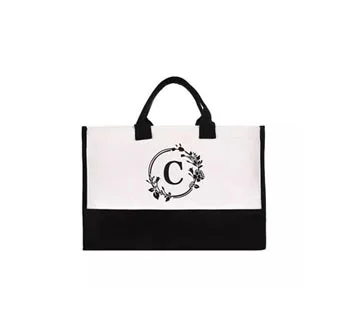
Yes. PP woven bags can be customized with supermarket logos, full-panel full-color artwork, seasonal campaign graphics, QR codes for membership registration or online shopping, store membership messages, eco-reuse slogans, and franchise or branch branding — with laminated surface printing that maintains color vibrancy and logo clarity through repeated use and cleaning cycles. Handle styles, bag sizes, lamination finishes, and packaging methods can also be customized for specific retail program requirements.

 English